What to Do When An Electrical Outlet Stops Working
An electrical outlet that’s not working can be frustrating to deal with and may be a sign of a larger electrical issue in your home. When you’re unable to power your appliances or devices, it helps to know what to do to get electricity flowing through the outlets again.
That said, troubleshooting a broken outlet can be dangerous, especially for those without proper electrical work experience and credentials. That’s why it’s essential to always have a licensed electrician handle all your home’s electrical needs, even for something that seems minor, such as a malfunctioning outlet.
This guide walks you through the causes of outlet failures, the limited checks you can safely perform and why it’s always best to let a professional electrician help with troubleshooting. The goal is to help you make informed decisions while keeping safety at the center of every step.
What Does It Mean When Your Outlets Stop Working?
Electrical outlets often stop working because of one or a combination of the following reasons:
- Overloaded circuits: An electrical circuit overload occurs when you plug in too many high-power appliances into the same circuit. As a result, the system can fail as a safety measure to prevent overheating and potential fire hazards. This shutdown often protects your home electrical wiring but may leave one or more outlets without power.
- A tripped circuit breaker or GFCI outlet: Circuit breakers and ground fault circuit interrupter (GFCI) outlets are designed to stop the flow of electricity when something goes wrong. A breaker may trip if it detects an overload or a short circuit. A GFCI outlet (commonly found in kitchens, bathrooms, garages, basements and outdoor areas) may trip if it detects moisture or an imbalance in electrical current. When this happens, the outlet itself isn’t broken, but it won’t work until the safety device is reset.
- Loose or outdated wiring: Damaged wire insulation, burned wiring or corroded connections can all cause an outlet to fail. These issues pose significant fire risks and require thorough inspection by a qualified electrician who knows what to look for.
- A faulty or worn outlet: Years of plugging and unplugging devices can wear down the internal contacts, and the outlet may no longer grip plugs securely. Internal components can break, burn out due to electrical overloading or become damaged in ways that aren’t visible from the outside. When an outlet reaches the end of its lifespan, replacement by a professional electrician is the only safe solution.
What Do I Do When an Outlet Stops Working?
Here’s a list of what to do if an outlet stops working without exposing you to electrical risk. Anything beyond these checks should be left to a professional:
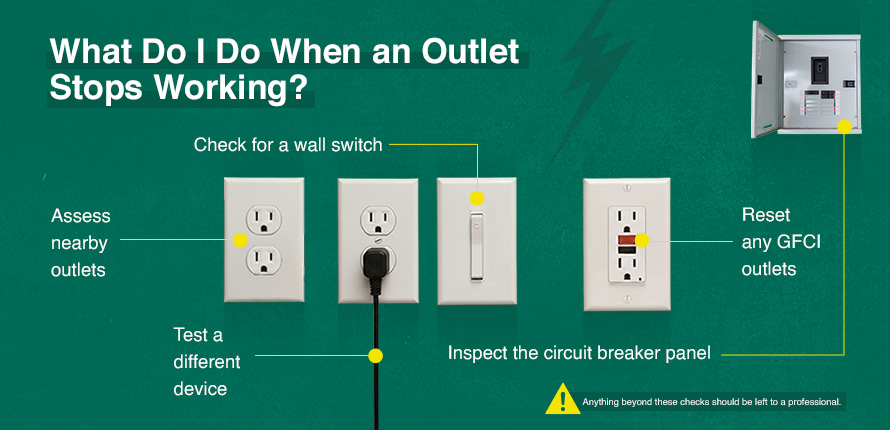
- Check for a wall switch: Some outlets are connected to a wall switch, often called “half-hot” outlets, allowing them to be turned on and off like a light fixture. Flip any nearby light switches on and off to see if one of them controls the outlet. The outlet might just be turned off.
- Test a different device: Sometimes, the problem might not be the outlet itself. Plug something you know works (like a lamp or phone charger) into the outlet. If that device works, then the original device or its cord is likely the problem.
- Assess nearby outlets: Outlets are often connected to each other on the same electrical circuit. See if other outlets in the room or nearby aren’t working either. If that’s the case, it means there’s likely a problem with the electrical circuit.
- Inspect the circuit breaker panel: Locate your electrical panel and look for a breaker that has moved out of alignment with the others. Flip that switch all the way to the “off” position, and then back to the “on” position. If the breaker trips repeatedly after you reset it, call a professional immediately, as this is a sign of a more serious underlying issue.
- Reset any GFCI outlets: GFCI outlets usually have two small rectangular buttons in the center marked “test” and “reset.” Check all GFCI outlets in your home and press the reset button on any that have popped out. You should hear a distinct click when the outlet resets. If the GFCI won’t reset or if it trips again immediately, call a professional electrician.
What Are the Dangers of DIY Electrical Outlet Troubleshooting?
While it’s okay to do some basic checks, you shouldn’t try to fix complicated electrical problems yourself unless you’re a trained electrician. Attempting complex DIY electrical repairs without proper training and experience is extremely dangerous and can have severe consequences, such as:
- Electric shock and injury: Touching live wires can cause severe burns, internal organ damage, cardiac arrest or even death. Without the right training, you can’t know for sure which wires are “live” and how to turn them off safely.
- Creating a fire hazard: Improper wiring, loose connections or the use of incorrect components can generate excessive heat, electrical arcs or short circuits. These conditions are primary causes of electrical fires, which can spread rapidly and cause significant damage to a home. A small mistake can ignite surrounding insulation, wood or other flammable materials within your walls, and you may not notice it until it’s too late.
- Causing more widespread damage: Messing up one outlet can damage other parts of your electrical system, leading to power outages, damage to your electronics or even compromise your entire home’s electrical system. One mistake can turn into a bigger and more expensive problem.
- Violating local building codes: Most electrical work is legally required to be performed by a licensed electrician to ensure the work meets stringent local and national electrical codes. If you make a mistake during a DIY repair, you could fail a home inspection, have problems with your insurance or have trouble selling your house if you plan on putting it on the market.
- Risk of undiagnosed issues: A DIY fix might seem to solve the problem, but it could be hiding a more serious issue. Professional electricians have the diagnostic tools and expertise to identify the root cause of the problem and fix it properly, helping ensure it doesn’t lead to larger issues later.
Trust Wiretech Company With Your Electrical Needs
If your outlet is still not working, do not risk your safety by attempting repairs on your own. Call Wiretech Company for professional solutions. We have been serving Raleigh and the greater Triangle area since 1990, providing dependable residential electrical services, including electrical outlet repair and replacement, electrical panel upgrades and repairs and whole-house surge protection. Our electricians focus on safety, clear communication and quality workmanship. We take the time to identify the cause of the problem and fix it the right way.
If an outlet in your home has stopped working, contact us to schedule a service call with a qualified electrician. We are ready to help you restore power safely and reliably.